Preferential Policies for Foreign-Invested Enterprises in the Shanghai Free Trade Zone: A Practical Guide from the Frontline
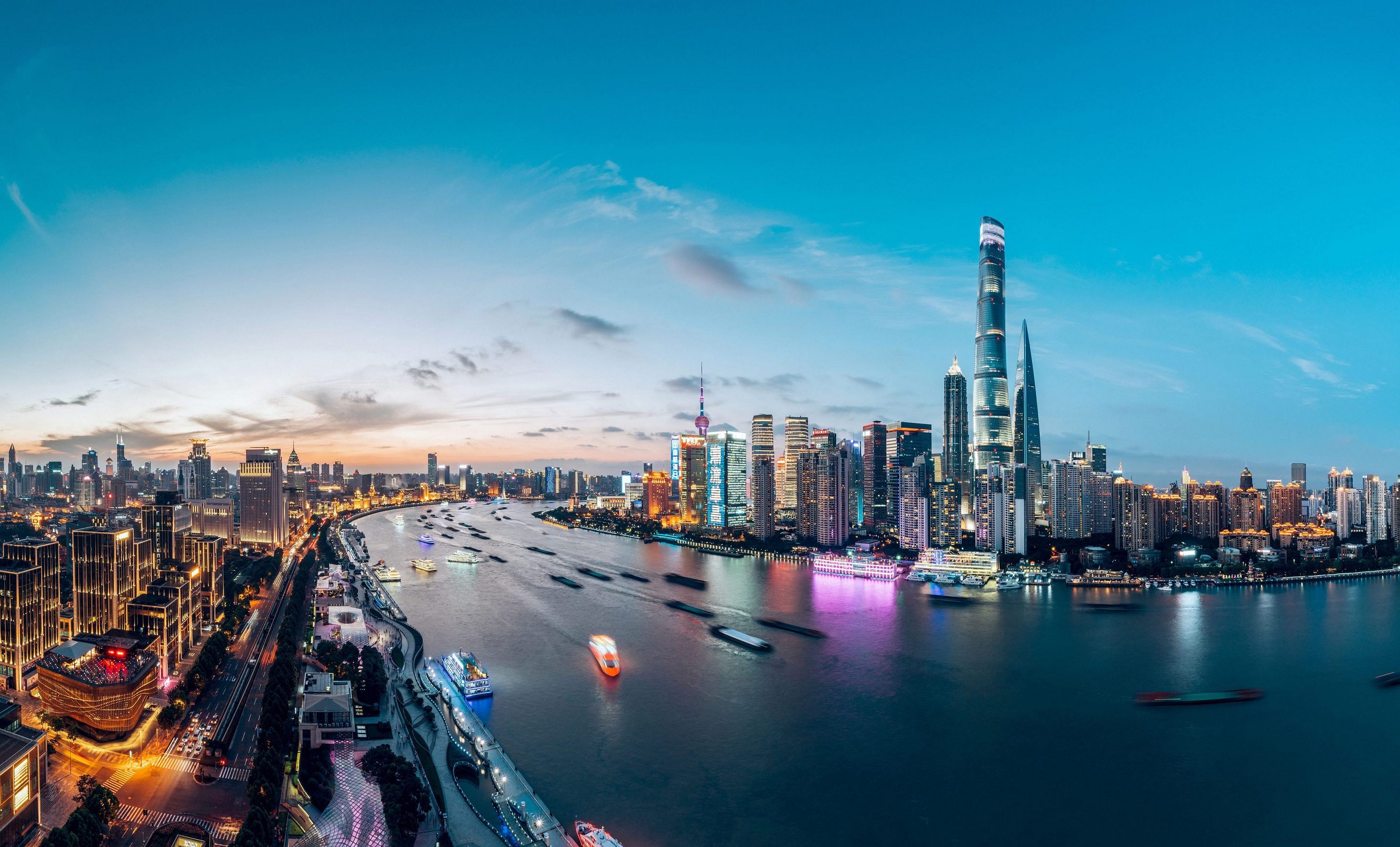
When I first set foot in Shanghai’s Pudong district back in 2009, the skyline was already impressive, but the Free Trade Zone (SHFTZ)—launched in 2013—was just a blueprint. Today, after 12 years of serving foreign-invested enterprises (FIEs) and 14 years dealing with registrations and administrative processes, I can tell you this: the SHFTZ isn’t just a geographic area; it’s a laboratory for China’s opening-up policies. For investment professionals, understanding these preferential policies is like holding a master key—unlocking cost savings, market access, and operational flexibility. Let me walk you through some of the most impactful aspects, based on what I’ve seen on the ground.
The SHFTZ has evolved from a pilot zone into a benchmark for national reforms. By end of 2023, over 60,000 foreign-funded enterprises had registered here, attracted by streamlined approvals, tax breaks, and financial liberalization. But here’s the kicker: many firms still miss out on benefits because they don’t dig into the nuances. So, let’s break it down—no fluff, just real-world insights from a guy who’s been in the trenches.
一、税收优惠与财政扶持
Tax incentives are the headline grabbers, and for good reason. The SHFTZ offers a reduced corporate income tax rate of 15% for qualified enterprises, including those in encouraged industries like advanced manufacturing, R&D, and green technology. This isn’t just a rumor; it’s codified in local implementation rules. For example, a German automotive parts supplier I worked with—let’s call them “Apex Auto”—saved nearly RMB 8 million in 2022 alone by relocating their regional headquarters to the Zone. But here’s a nuance: the 15% rate is tied to a list of “encouraged sectors” that gets updated annually. You can’t just show up and claim it; you need to file a pre-qualification with the tax bureau, proving at least 60% of your revenue comes from qualifying activities.
Beyond CIT, there’s a value-added tax (VAT) rebate scheme for export-oriented FIEs. Under the “Shanghai Model,” enterprises can get a quicker refund—within 7 working days for standard cases, compared to the national average of 15-20 days. I recall a tech startup from Israel that was tearing its hair out over cash flow in 2021. After we helped them restructure their export contracts and register for the fast-track VAT refund program, their liquidity improved by 18% in three months. The key is meticulous documentation—invoice matching, customs declarations, and contract terms must align perfectly. One misstep, and the taxman will kick you back to the regular queue.
Local governments also dish out cash subsidies for R&D spending. In the SHFTZ’s Zhangjiang sub-zone, for instance, FIEs can claim up to 30% of their eligible R&D expenses as a direct subsidy, capped at RMB 5 million per year. This isn’t free money, though. You need a detailed R&D project plan, annual audit reports, and a minimum spend of RMB 1 million. I’ve seen firms where the CFO got so excited by the subsidy that they forgot to track personnel costs properly—and got audited two years later. My advice: assign a dedicated compliance officer from day one.
Finally, don’t overlook the “negative list” approach to taxation for cross-border services. Under the SHFTZ’s pilot, certain professional services (like consulting or software development) provided to overseas clients are exempt from VAT. This is a game-changer for service-oriented FIEs. A British law firm I advise saved roughly 12% on its service revenue by reclassifying its contracts under this exemption. But again, the devil’s in the details—the contract must explicitly state the service is “supplied outside China,” and the recipient must be a non-resident entity. Get this wrong, and you’re looking at back taxes plus penalties.
二、跨境资金流动便利化
If tax is the engine, cross-border capital flow is the fuel for FIEs. The SHFTZ pioneered the “Free Trade Account” (FTA) system, which essentially allows enterprises to manage both onshore and offshore funds in a single account, with simplified settlement. This means you can convert RMB to foreign currencies for current account transactions—like dividends or import payments—without needing separate approval each time. For a Japanese trading house I worked with, this cut the time for remitting profits to Tokyo from 10 days to just 2. They were thrilled, but I had to caution them: the FTA is monitored real-time by the PBOC (People’s Bank of China). Any mismatch between declared purpose and actual use triggers a red flag, and you could lose the account privilege for a year.
Another big win is the relaxation on offshore borrowing. FIEs in the SHFTZ can now borrow from overseas banks up to twice their net assets, without needing to register each loan with the State Administration of Foreign Exchange (SAFE). This is a huge leap from the pre-2015 era, when each loan needed a ten-page application. A Korean chemical firm I assisted used this to raise USD 50 million at 3.5% interest—far cheaper than onshore rates of 5-6% at the time. But here’s the catch: the borrowed funds must be used for capital expenditures or R&D within the Zone, not for speculative activities like stock trading. I’ve seen two companies get fined for using offshore loans to buy wealth management products. The SAFE audit team is surprisingly thorough—they’ll trace the money trail back to your suppliers.
Then there’s the cross-border renminbi (RMB) settlement program. The SHFTZ allows FIEs to settle trade transactions directly in RMB with overseas partners, bypassing USD intermediary banks. This reduces costs and currency risk, especially for firms dealing with ASEAN or Belt and Road countries. A Singapore-based logistics company I know saved 0.8% in transaction fees annually just by switching to direct RMB settlement for their Shanghai operations. But the policy also requires that your counterparty’s bank be on an approved list—otherwise, the settlement will be rejected at the clearing house. I always recommend keeping a PDF copy of the approved bank list handy, because it changes quarterly.
One more thing: the SHFTZ’s pilot for “QDLP” (Qualified Domestic Limited Partner) and “QFLP” (Qualified Foreign Limited Partner) allows foreign asset managers to raise RMB funds from local investors and invest in overseas markets. This is a niche but powerful tool. A US private equity firm used the QDLP quota to channel RMB 300 million into a Southeast Asian infrastructure fund—something impossible outside the Zone. The compliance burden is heavy, though. You need a local fund administrator, quarterly reporting, and a minimum fund size of RMB 100 million. If you’re not prepared for that paperwork jungle, don’t jump in blindly.
三、准入前国民待遇与负面清单
The “pre-establishment national treatment plus negative list” is the SHFTZ’s most famous structural reform. In plain English, it means foreign investors are treated the same as domestic firms before they even set up shop—except for sectors on a short “negative list” where restrictions apply. As of 2024, the negative list has shrunk to 30 items (down from 190 in 2013), covering things like telecommunications, education, and media. For investment professionals, this is a golden ticket: you don’t need to apply for special approval unless your business falls on the list. I’ve had a French fintech startup register a wholly-owned subsidiary in just 15 working days—compared to 45 days outside the Zone—because their activity (blockchain-based payment platform) wasn’t on the list.
But don’t get complacent. The negative list is interpreted locally, and SHFTZ authorities sometimes take a stricter view than the central government. For instance, the list bans foreign equity in “internet data centers,” but the Zone’s tech park has allowed a few FIEs to operate “cloud services” via a joint venture with a local telecom company. This gray area requires you to have a good relationship with the administrative committee—and a lawyer who knows the local interpretation. I recall an American IT firm that spent six months fighting for a license because their business model didn’t match the list’s exact wording. We eventually got it through by framing their service as “technical consultancy” rather than “data hosting.” It’s all about presentation.
Another nuance: the negative list doesn’t apply to the “special economic zones within the Zone,” like the Waigaoqiao Bonded Area. Here, even previously banned sectors like “for-profit education” are permitted for FIEs with special approvals. A Canadian language training company I partnered with set up a school in Waigaoqiao, offering IELTS prep—something that would be illegal for foreign entities in downtown Huangpu. The catch? They had to commit to employing at least 70% local teachers and cap tuition hikes at 5% per year. These soft restrictions are not in the formal list, but they’ll be in your contract. Read every clause carefully, and negotiate if you can.
For professionals, the “access first” principle also reduces administrative burden: FIEs no longer need to submit a feasibility study report for standard projects. This saved my clients an average of 35 pages of documentation per registration. But the trade-off is that the post-establishment supervision has tightened. The Zone’s “random inspection” system means about 5% of new FIEs get a surprise visit from regulators within the first year. I advise all my clients to keep their incorporation documents, tax filings, and meeting minutes in a ready-to-show binder—because when the inspector calls, you have 48 hours to produce them.
四、通关便利与贸易便利化
For FIEs involved in import-export, the SHFTZ’s customs reforms are a godsend. The “single window” system allows you to submit all trade documents—customs declaration, inspection, quarantine—in one digital portal. The average clearance time for low-risk goods has dropped from 2 days to 4 hours. A Swiss precision machinery maker I work with cut their port demurrage costs by 30% after adopting this system. But here’s the trick: you need to enroll in the “AEO” (Authorized Economic Operator) certification, which gives you priority green-lane treatment. The certification process took us 4 months, including an on-site audit where the customs officer counted every screw in the warehouse. It’s intensive, but the payoff is real—our client now clears customs with 95% inspection exemption.

The “bonded storage” policy is another gem. FIEs can store imported raw materials or finished goods in the SHFTZ’s bonded warehouses without paying duty until they leave the zone for domestic sale. This is huge for cash flow. An Italian luxury goods company stored EUR 20 million worth of handbags in the Zone for 8 months, delaying duty payment until they shipped to retailers in Beijing. That saved them roughly RMB 1.2 million in interest costs. But the inventory must be tracked with RFID tags and reported to customs every 30 days. Miss a deadline, and you get a warning—three warnings, and you’re out of the bonded scheme for a year. I’ve seen a small trading firm lose this privilege because their warehouse manager didn’t sync the digital count with customs’ system. It’s a pain, but automate it if you can.
There’s also “pre-shipment inspection” flexibility. Normally, imported machinery must be inspected at the port, causing delays. In the SHFTZ, you can opt for “post-shipment inspection,” where the goods enter the Zone first, and the inspection happens at your factory or warehouse within 30 days. This allows you to start production immediately while the paperwork catches up. A German industrial robot manufacturer did this—got their assembly line running 10 days earlier than their competitors outside the Zone. However, post-shipment inspections are random and costly if you fail. One of my clients imported a batch of optical lenses that had a minor scratch—the customs post-inspection downgraded them from “new” to “used,” resulting in a 15% tariff surcharge. The lesson: don’t treat post-inspection as a free pass; maintain quality control as if a customs officer is watching.
Lastly, the SHFTZ started a pilot for “fast-track food certification” in 2023. Imported food products (e.g., wine, cheese, coffee) can now get China’s “QS” certification within 5 working days inside the Zone, versus 20 days externally. A French vineyard client used this to launch their new vintage in Shanghai’s high-end supermarkets three weeks ahead of schedule. The certification requires lab testing in the Zone’s accredited labs, but they’re cheaper than international ones—about RMB 2,000 per batch. If you’re in FMCG, this is your sweet spot.
五、知识产权保护与司法保障
IP protection is a perennial headache for FIEs in China, but the SHFTZ has made real strides. The Zone established a specialized IP tribunal in 2019, handling patent, trademark, and trade secret cases with a streamlined process. Average case resolution time is 6 months, compared to 18 months in regular courts. A US biotech firm I consulted—let’s call them “SynthGen”—won a patent infringement case against a local copycat in just 5 months, getting damages of RMB 12 million. The judge even ordered a public apology at the Zone’s trade fair. But the system isn’t perfect. The tribunal often uses “mediation-first” approach, which can feel like pressure to settle. SynthGen initially wanted to go all the way, but the mediator—a retired judge—persuaded them to accept a slightly lower amount to avoid a longer trial. Sometimes pragmatism beats principle, but you need a local lawyer who knows the mediator’s reputation.
The SHFTZ also offers a “IP pledge financing” scheme. Foreign-invested SMEs can use their registered patents or trademarks as collateral for bank loans of up to RMB 20 million. This is fantastic for cash-strapped startups. A Danish clean-energy company I advised got a RMB 8 million loan using their three Chinese patents as collateral. The whole process took 6 weeks, including a patent valuation by a Zone-accredited agency. However, the valuation fees are around RMB 30,000, and if your patent hasn’t been granted yet, the bank won’t touch it. So, get your IP registered early—even before you start operations in the Zone.
Another point: the SHFTZ has a “IP fast-track registration” office. Under the “PCT-Shanghai” channel, international patent applications can be filed in Chinese and English, with the search report completed in 10 months instead of 16. A Japanese electronics firm used this to file 15 patents in one year, speeding up their market entry. But the office has a limit of 500 applications per quarter, so it’s first-come, first-served. I always book a slot at least 3 months before the filing deadline—don’t wait till the last quarter.
Finally, trade secret protection is becoming a focus. The Zone has launched a pilot “trade secret registration” system, where you can deposit evidence (e.g., encryption logs, meeting minutes) with a third-party custodian. If theft occurs, the custodian provides a tamper-proof timestamp. A Swiss pharmaceutical firm I know used this to successfully sue a former employee who leaked drug formulas to a competitor. The court accepted the custodian’s logs as primary evidence. The cost per registration is only RMB 2,000, and I recommend it for all FIEs with sensitive technical data. It’s cheap insurance.
六、人才吸引与居留便利
FIEs can’t operate without top talent, and the SHFTZ has policies to help. The “Foreign Talent Visa” program allows senior managers and technical experts of FIEs to get a 2-5 year residence permit, renewable without leaving China. For a US semiconductor firm I assist, this meant their Chief Engineer—a Chinese-American with a US passport—could stay in Shanghai for 5 years, saving his company an estimated RMB 600,000 in annual visa fees and travel costs. But the policy requires a “certificate of high-need talent” from the Shanghai Human Resources Bureau. The application involves a 20-page dossier, including a letter explaining why the position can’t be filled by a local. It took us 4 months to get it accepted. My tip: document your recruiting efforts in China—show that you advertised on 3 local job boards and got zero qualified candidates.
The “Shanghai-HK PhD Program” is another hidden gem. FIEs in the SHFTZ can co-supervise PhD students from Hong Kong universities, with the student spending half their time at the FIE’s R&D center. The company gets fresh academic insights, and the student gets a monthly stipend of RMB 15,000 from the zone—half of which the company can claim as a tax deduction. A British AI firm I worked with used this program to recruit 3 PhD students specializing in natural language processing. They ended up hiring all three post-graduation. The paperwork is minimal compared to typical work visas—just a university agreement and a supervision plan.
For day-to-day living, the SHFTZ has a “fast-track tax equalization” for foreign employees. Under this, the zone exempts foreigners from the “social insurance surcharge” that domestic workers pay—saving them about 8% of salary. This doesn’t sound huge, but over a 3-year assignment, it adds up to around RMB 120,000 for a mid-level manager. My personal reflection: this policy isn’t widely advertised, so many FIEs miss it. When I told a Korean client about it, their HR director was shocked—they’d been paying the surcharge for 2 years. China’s bureaucracy is complex, and sometimes the best benefits are the ones you have to hunt for.
One more thing: the “spouse work permit” policy now allows spouses of FIE executives to apply for an open work visa, valid for as long as the executive’s permit. This is a quality-of-life win. A French couple I know—the husband runs a consulting firm, the wife is a designer—used this so she could freelance for Shanghai’s fashion houses without an individual work permit. She ended up earning enough to offset their housing costs. However, the spouse visa requires the executive’s salary to be above a certain threshold (RMB 50,000/month in 2024). If you’re assigning junior staff, this won’t apply.
七、金融创新与自由贸易账户升级
The SHFTZ continues to push financial innovation. In 2023, the “FTU 2.0” (Free Trade Account Upgrade) was launched, offering overnight overdraft facilities of up to RMB 10 million for qualified FIEs. This is a short-term liquidity tool—perfect for covering a sudden tax payment or supplier invoice. A Hong Kong toy manufacturer I know used the FTU 2.0 overdraft to bridge a 7-day gap in receivables, paying only 4.5% interest (compared to 8% on a typical Chinese bank loan). But the overdraft must be repaid within 10 business days; otherwise, the grace period expires and daily penalty interest of 0.05% kicks in. Set an auto-reminder in your ERP system.
Another major step: the “cross-border bond issuance” pilot. FIEs in the SHFTZ can now issue Panda bonds (RMB-denominated bonds) on China’s domestic market, with fewer restrictions than before. A German renewable energy company raised RMB 2 billion at 3.2% coupon in 2024, using the funds to build a solar farm in Xinjiang. The proceeds must stay in the FTA account and be used for projects within China. If you try to convert the RMB into USD and send it out, the PBOC will flag you instantly. The approval process took about 10 weeks, including a review by the Shanghai Stock Exchange. If you’re considering this, start preparing your financials 6 months in advance—due diligence is no joke.
The “digital yuan” pilot in the SHFTZ is also worth mentioning. FIEs can now settle inter-enterprise transactions within the Zone using e-CNY, which attracts zero transaction fees (compared to 0.3% for bank transfers). A local logistics company saved RMB 50,000 annually just by paying its warehouse rent via digital yuan. But the system is still clunky—maximum single transaction limit is RMB 500,000—and not all banks support it yet. I’d call it a “nice to have” rather than a game-changer, but it’s a sign of where China’s financial system is heading.
Finally, the SHFTZ has launched a “green finance pilot” where FIEs can issue sustainability-linked loans with lower interest rates if they meet certain ESG criteria. A Singaporean palm oil trader got a 100-basis-point reduction on their USD 100 million loan by agreeing to reduce deforestation in their supply chain. The verification is done by a third-party agency like SGS, and it costs about RMB 200,000 per year. If your firm has a credible ESG plan, this is a tangible financial benefit—and it aligns with global trends.
八、产业扶持与专项补贴
Beyond broad tax and finance, the SHFTZ offers targeted industry subsidies. For example, the “AI and Big Data Special Fund” provides up to RMB 10 million for FIEs developing AI applications in healthcare or finance. An Indian software firm I know got RMB 8.5 million to build a medical diagnostic platform, contingent on employing 20 local PhDs within 2 years. The grant is disbursed in installments—30% upfront, 40% at midpoint, 30% upon completion of a product prototype. The reporting burden is intense: quarterly progress reports, financial audits, and a final assessment by the Shanghai Science and Technology Commission. If your project fails to meet milestones, the grant can be clawed back. But for firms with solid tech, this is free money.
The “Manufacturing Upgrade Program” offers a 20% subsidy on the purchase of industrial robots or smart manufacturing equipment. A Taiwanese electronics manufacturer in the Zone claimed RMB 12 million to upgrade its assembly line with 30 robots from ABB. However, the equipment must be purchased from a Chinese supplier—imported robots are excluded. This is a protectionist twist, but you can work around it by forming a joint venture with a local equipment provider. The subsidy application requires a 30-page business plan showing how the upgrade reduces energy consumption by at least 15%. Yes, it’s bureaucratic, but the ROI is compelling—the subsidy effectively cut their equipment cost by one-fifth.
For R&D-heavy FIEs, the “Technical Innovation Fund” covers up to 50% of the cost of setting up a joint lab with a Chinese university. A Dutch medical devices firm partnered with Fudan University to create a lab for prosthetics, receiving RMB 5 million from the fund. The caveat: 50% of the lab’s research outputs must be published in Chinese journals. Some foreign executives grumble about this, but from a practical standpoint, it increases the firm’s visibility in the Chinese market. I’ve seen a few firms exploit this by co-authoring papers that later boosted their reputation with Chinese hospital procurement departments. Win-win, if you play the game right.
Lastly, don’t ignore the “Headquarters Economy” subsidies. FIEs that set up regional headquarters (RHQ) in the SHFTZ can get a one-time grant of RMB 10-30 million, depending on their registered capital. An American chemical giant opened its Asia-Pacific HQ in the Zone in 2023 and received a RMB 25 million subsidy. The funds are not free—the government expects the RHQ to create at least 200 local jobs and contribute RMB 100 million in revenue within 3 years. If you fall short, the subsidy is prorated to a lower tier. My advice: forecast conservatively and over-deliver, because the Zone’s authorities audit this stringently. I’ve seen a case where a firm had to return 40% of the subsidy because they only hired 120 people.
As you can see, the SHFTZ’s preferential policies are like a thick, layered cake—sweet on top, but you need to eat through some mix of paperwork and compliance to get to the best bits. The common theme is that these policies favor proactive, well-prepared firms. Don’t expect the government to hand you benefits; you need to actively apply, document, and sometimes negotiate. Over the past 12 years, the most successful FIEs I’ve seen are those that treat the SHFTZ not as a passive location, but as an active partner in their China strategy. They hire local compliance officers, build relationships with the administrative committee, and embrace the occasional bureaucratic fog as part of the game.
Now, about the future. I think the SHFTZ will accelerate its move from “hard incentives” (tax breaks) to “soft infrastructure” (digital platforms, talent pools, and legal certainty). The 15% CIT rate is politically sustainable, but I expect more emphasis on service trade liberalization—for example, allowing foreign law firms to practice Chinese law in the Zone, or permitting cross-border data flows for financial analytics. The recent 2024 Policy White Paper hints at this. For investment professionals, this means the next golden era might not be about tax savings, but about market access and operational agility. If you’re considering a China foothold, the SHFTZ is still the smartest bet, but don’t treat it as a static pot of gold. It’s a moving target, and you need to keep running to stay ahead.
Teacher Liu’s Insight from Jiaxi Tax & Financial Consulting
Having shepherded over 80 foreign-invested enterprises through the SHFTZ’s policy maze since 2012, I’ve come to see that the real value of these preferences isn’t in the numbers—though those matter—but in the strategic flexibility they grant. At Jiaxi, we often tell clients: “The policy is the map, but you still need to walk the road.” Too many firms focus on the cash subsidies and forget the compliance hygiene that keeps them eligible. For example, the FTA account is a double-edged sword—it can turbocharge your cash flow or get you slapped with a fine if used improperly. Our recent work with a European logistics firm showed that integrating the SHFTZ’s “single window” with their ERP system reduced customs errors by 70% in just six months. The takeaway? Preferential policies are not set-and-forget; they require continuous monitoring, especially as Shanghai rolls out new pilots every few quarters. We recommend our clients maintain a “policy calendar” and a local compliance partner who attends the Zone’s quarterly briefings—because the best opportunity is often the one you hear about first. As China’s regulatory environment evolves toward more rule-of-law consistency, the SHFTZ will likely become a testing ground for national reforms. For FIEs, the cost of entry is high (think: legal fees, audits, and personnel), but the cost of missing out is higher. Partner with a firm that knows the Zone’s unspoken rhythms—it’s not just about what the policy says, but how it’s implemented on a Tuesday afternoon by a specific officer in the administrative committee. That local knowledge is, in my view, the ultimate preferential policy.